English
Catalogue
Download the catalogue


GenoScreen
1 rue du Professeur Calmette
59000 Lille, France

contact@genoscreen.fr

+33 (0)3 62 26 37 77
GenoBiome® - All-in-one diagnostic solution for microbiome
Genomics has revolutionized the study of microbiomes by enabling in-depth analysis of the DNA of micro-organisms present. Based on this approach, GenoBiome® makes it possible to characterise microbial diversity, identify specific species and study the interactions between these micro-organisms and their environment.
Discover new opportunities in developping products
respecting symbiotic bacterial communities







Integrative solution for
studying microbial communities
GenoBiome® offers a complete range of support services for microbial community analysis, with analytical and bioinformatics protocols designed specifically for the matrix studied (skin, soil, gut).
The aim of this solution is to provide you with the scientific support, technical analysis and flexible assistance needed to lead your project to a comprehensive resolution of your biological inquiries.
Our consultancy services, provided by Ph.Ds in microbial ecology or genomics, foster a holistic approach to scientific research and a focus on the repeatability and reproducibility of experimental outcomes.
Interactive reports for research,
marketing & regulatory purposes
Experience interactive reports tailored to your needs, facilitating in-depth analysis and comprehension of complex data. Additionally, benefit from comprehensive support for data reporting, enhancing transparency and clarity in scientific communication.
Easy-to-navigate report
Zoom, filter, and explore your data directly within the report, no additional tools needed
Enriched visualizations
Interactive graphs and tables with clear explanations
Comprehensive context
Gain a richer understanding with detailed annotations
Transparent methodology
Access a step-by-step explanation of the analysis methods used
The reports provided with GenoBiome® can be adapted to the purpose of your project:
High level of scientific detail and support from genomics experts
Actionable results that can be used to make allegations, with support for their use
Transparency and support in compiling dossiers
Let our experts guide you through your project

Experimental design
Design your project along qualified
microbiome experts, starting from your biological question.

Sampling strategy
Our support extends to implementing a standardized sampling strategy for reliable data generation and accurate interpretation of results
Sampling kit
A sampling kit can be supplied with a conservation protocol to ensure that integrity is maintained during transport.

Customized samples analysis
Our wide technical portfolio allow you to answer your projects needs, whether it is based on short read sequencing, long read technology or qPCR analysis.
Our sequencing strategy will be driven by your project features, each aspects from the extraction to the analytical methods will be specifically build around them.
Extraction methodology
Use of low-biomass extraction methods to isolate and purify DNA or RNA from biological samples with a limited amount of genetic material.

Proprietary analysis pipelines
We provide you with curated bioinformatic tools and databases for microbiome analysis with pipelines developed in-house and adapted to the nature of the studied sample.

Results interpretation
You will be provided comprehensible, ready-to-publish and clear results along with a guided tour to ensure that you get the most out of our analysis.
Interactive report
Regardless of the purpose of your project (research, marketing or regulatory), the results will be suitable for everyone.

Expert support
Comprehensive scientific, technical, and commercial support throughout your entire project, with PhD-level microbiologist consultations.
Dedicated partner
You will work with one of our experts who will tailor solutions to your specific needs.
Discover our latest newsletters...
Find out more about our articles on the skin microbiome

Why preserve the skin microbiota?

Skin microbiome's influence on skin health.

How to preserve the skin microbiota?
Skin microbiome analysis
The skin's microbiota is made up of billions of microorganisms, covering various species, living in community and closely linked to skin health.
Increasingly, the microflora is being studied using genomics solutions, and GenoScreen has developed a complete solution for analysing the skin microbiome. These technologies open up new prospects for the development of cosmetics, skincare products and personalised treatments for atopic skins. With its experience and know-how, GenoScreen has developed a complete solution for analysing and characterising the skin microbiome.
This email address is being protected from spambots. You need JavaScript enabled to view it.

What genomics can bring to skin microbiota understanding ?
Metagenomics is the most complete and cutting-edge approach for characterizating and studying microbiomes, allowing to have a global overview of microorganisms in presence in any sample, and their functional potential.GenoScreen intervenes at different steps of any research and development project on skin microbiome. Our genomic solutions cover the following purposes :


scientific development
Impact studies
on skin microbiota of skincare product or active ingredient
Clinical studies
in dermatology or dermocosmetics to assess treatments effects on skin diseases
Active objectivation
Proofs of concept of active ingredients effects on cutaneaous microorganisms
Claim validation
, scientific based, to ensure product interaction with skin microbiome
R&D exploratory projects
focusing on skin microbiota
Prebiotics, Probiotics, Postbiotics
ingredients testing
Microbial communities exploratory studies - R&D collaboration
for biomarker detection, focused analysis for instance etc
Substantiation of «microbiome friendly» claims
proving that the concerned cosmetic product doesn't harm the consumer microbiota and his epidermis health
Scientific communication support
with ready-to-publish results

& microbiome expertise
This email address is being protected from spambots. You need JavaScript enabled to view it.
Our solutions for skin microbiome testing and analysis
From your biological question to its technological answer, we bring together our technologies and know-how to offer the best solution fitting your project. Mainly performed on in-vivo human samples, our analysis can be conducted with other models (in-vitro synthetic reconstructed human epidermis, ex-vivo explant tissue cultures).
Discover our services




Taking into account all microorganisms (all domains, kingdoms and genera combined) in a single analysis
Relative quantification of samples’ population
Global and complete overview of microbiota’s genome
Skin microbiome functional potential
Gene annotation
Discover our latest newsletters...
Find out more about our articles on the skin microbiome
Why preserve the skin microbiota?
Skin microbiome's influence on skin health.
How to preserve the skin microbiota?
Characterization and tracking of isolated microorganisms
By applying a broad panel of genomic technologies and services, GenoScreen provides various solutions in identifying microorganisms via DNA sequencing and comparison with international databases.
These powerful and precised solutions are able to identify and characterize the microorganisms of interest: the species, the sub-species or the strain, typing, tracking and antibiotic resistance.
Identification and characterization
In order to identify a specie, ribosomal DNA regions targeted are adapted to each microorganism.
Additionally, to refine and adapt the identification to your needs, other genomic targets (rpoB and gyrB genes, etc.) are then used (discrimination within a group of species sharing the same ribosomal DNA sequence, for example).
GenoScreen can also leverage its know-how in whole-genome sequencing for a more precised characterization of a strain : virulence, antibiotic resistance, genomic comparisons with the strain library, etc.
Microbial typing and tracking
Our solution precisely characterizes any microorganism at the sub-species or strain level by using standardized, validated molecular methods, such as multilocus sequence typing (MLST) and multiple loci VNTR analysis (MLVA).
The typing schemes in open-access databases (PubMLST, MLST.org and MicrobesGenotyping) are used as references for these analyses.
The analysis can also be performed on a custom typing scheme.
GenoScreen, the world leader in tuberculosis genotyping
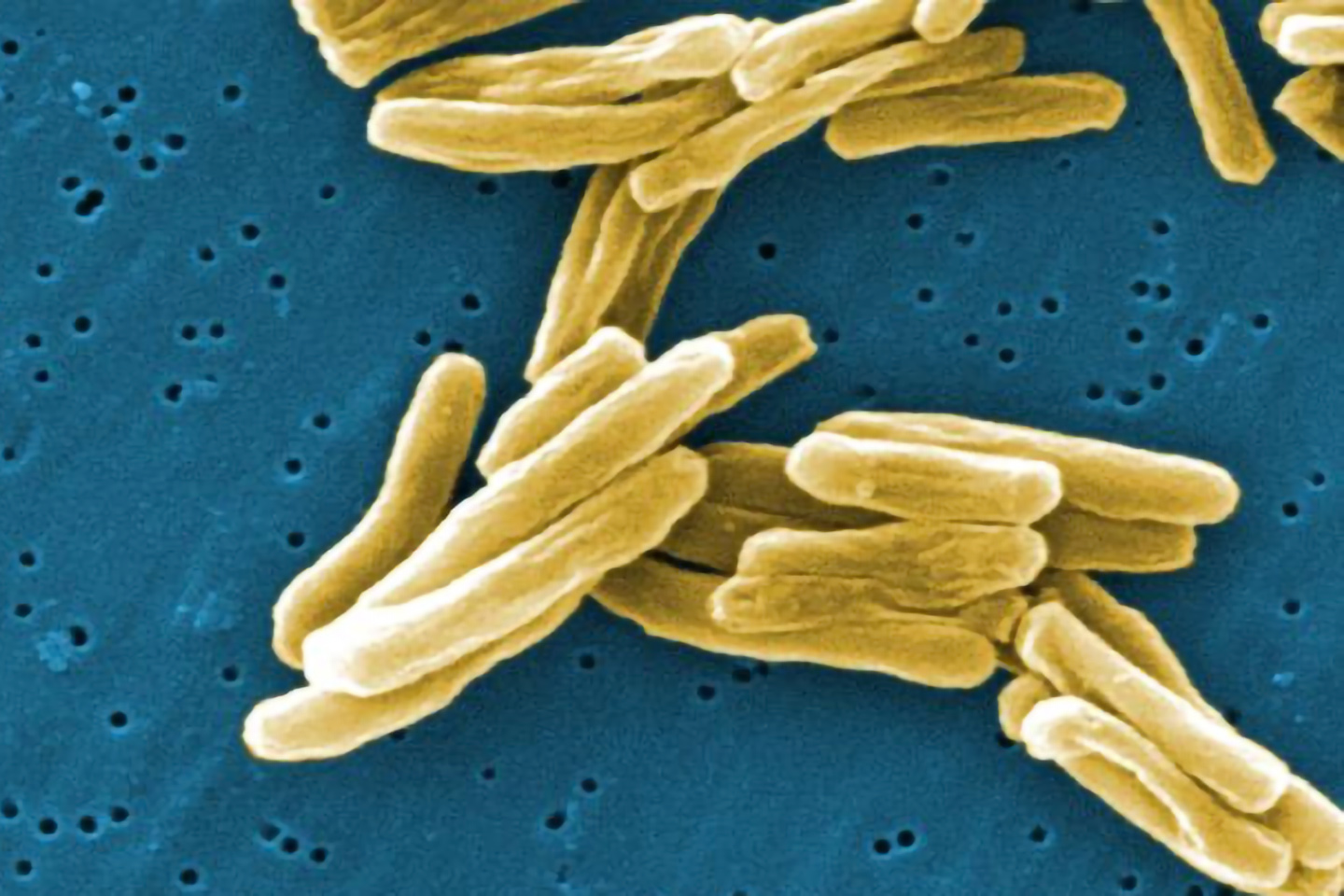
Credits to its cutting-edge technological know-how, GenoScreen is now the leader worldwide in genotyping and tracking of the Mycobacterium tuberculosis complex strains (the agent that causes tuberculosis).
The MIRU-VNTR solution developed by our teams is used as a kit or a service by many healthcare centers and research groups. A complementary spoligotyping approach is also available for identifying sub-species.
We propose kits and training courses for the implementation and an optimized use of the MIRU-VNTR method on Applied Biosystems® and QIAGEN® sequencers in your hospital or lab.
Antibiotic resistance
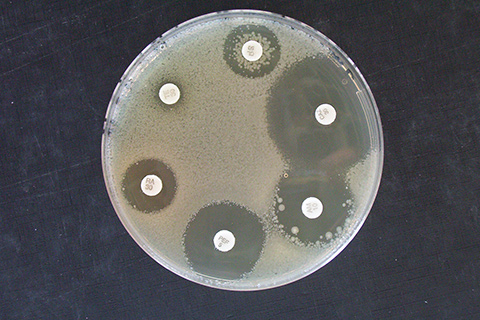
GenoScreen determines antibiotic resistance profiles via targeted sequencing of genes known to be associated with antibiotic resistance or by whole-genome sequencing. The sequences are compared with open-access databases or the literature data.
In-depth NGS sequencing can detect the presence of low-frequency variants conferring resistance (heteroresistance).

Deeplex®-MycTB - The all-in-one solution for characterizing Mycobacterium tuberculosis
The Deeplex®-MycTB solution developed by GenoScreen is a major innovation for the identification, characterization and epidemiological surveillance of tuberculosis for research purposes.
Deeplex®-MycTB is an all-in-one test for species-level identification, genotyping and prediction of antibiotic resistance in Mycobacterium tuberculosis complex strains.
Home GenoScreen Expertise
Expertise
An expertise in the genomic characterization of microorganisms
As an international specialist in microbial genomics, GenoScreen develops fast and precised solutions for characterizing, tracking and typing isolated microorganisms (bacteria, fungi, yeasts, etc.) and analyzing complex microbial florae:
- Scientific and technological services with a high level of expertise.
- Research under contract.
These advanced analytical strategies address many research issues in healthcare and environmental sectors. These techniques can identify, track and characterize microorganisms on the individual or community scale in order to understand their positive or negative impacts on health, safety and well-being of humans, animals and environment.
Examples of projects developed by GenoScreen
- Development of a genomic characterization process for genetically modified bacteria
- An analysis of the impact of a molecule designed to protect the intestinal microbiota from the effects of antibiotic treatments.
- Measurement of probiotics and other food complements’ impact on the digestive microbiota of certain farm animals, with the goal of accelerating their development.
- A study of a balanced microbial flora reestablishment.
- A study of skin creams impact on the cutaneous microbiota (with GenoBiome® Skin),
- Tool development of microbial florae metatranscriptomic analysis
The analysis of microbial communities (microbiotas)
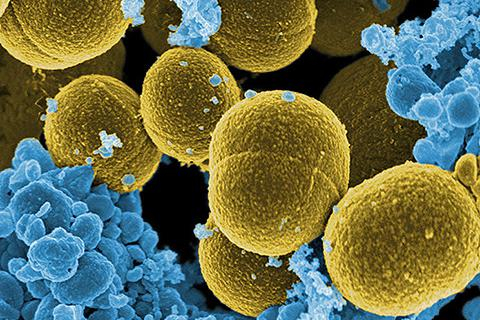
A microbiota analysis provides information on the entire set of microorganisms (bacteria, yeasts, fungi, algae, etc.) present in a given sample.
This type of analysis is now crucial in the evolution of research in human and animal health, nutrition, environment and biotech.
As a leading provider of genome analysis services, GenoScreen provides powerful, comprehensive solutions for microbiota analysis that will boost your research and give you huge beneficial options in genomics of the future!
Understanding whole ecosystems on the molecular scale
When compared with conventional microbiological tests, molecular analyses of microbial communities are, above all, useful in the study of microorganisms within their ecological niches, i.e. in the absence of culture steps in artificial media that separate the microorganisms from their community and their natural environment.
These microbial ecology analyses provide information on biomass, composition, diversity, functions, interactions between microorganisms and interactions with their habitat.
Subcategories
GenoScreen
Collaborative research - At the heart of international innovation in genomics
GenoScreen is a partner in collaborative research projects that bring together startups, multinationals and public-sector organizations. Our R&D teams provide their knowledge and expertise in the molecular microbiology of isolated agents and complex communities. This allowed our teams to develop our own projects for elaborating innovative products and services.
Our projects are designed to:
- Improve the diagnosis and management of acute/chronic diseases on humans and animals,
- Characterize and monitor microbial biodiversity, with applications in agronomy, agrifood and environment.
The common feature of these projects is the development of molecular tools for the characterization, monitoring and diagnosis of microbial communities. The key objective is to market simple analytical solutions and (ultimately) preventive, corrective or even therapeutic products based on microorganisms.